


No matter how well they are taken care of, even the highest quality knives won’t stay sharp forever. With use, they need maintenance. They should be honed regularly and sharpened occasionally.
HOW TO SHARPEN YOUR KNIVES
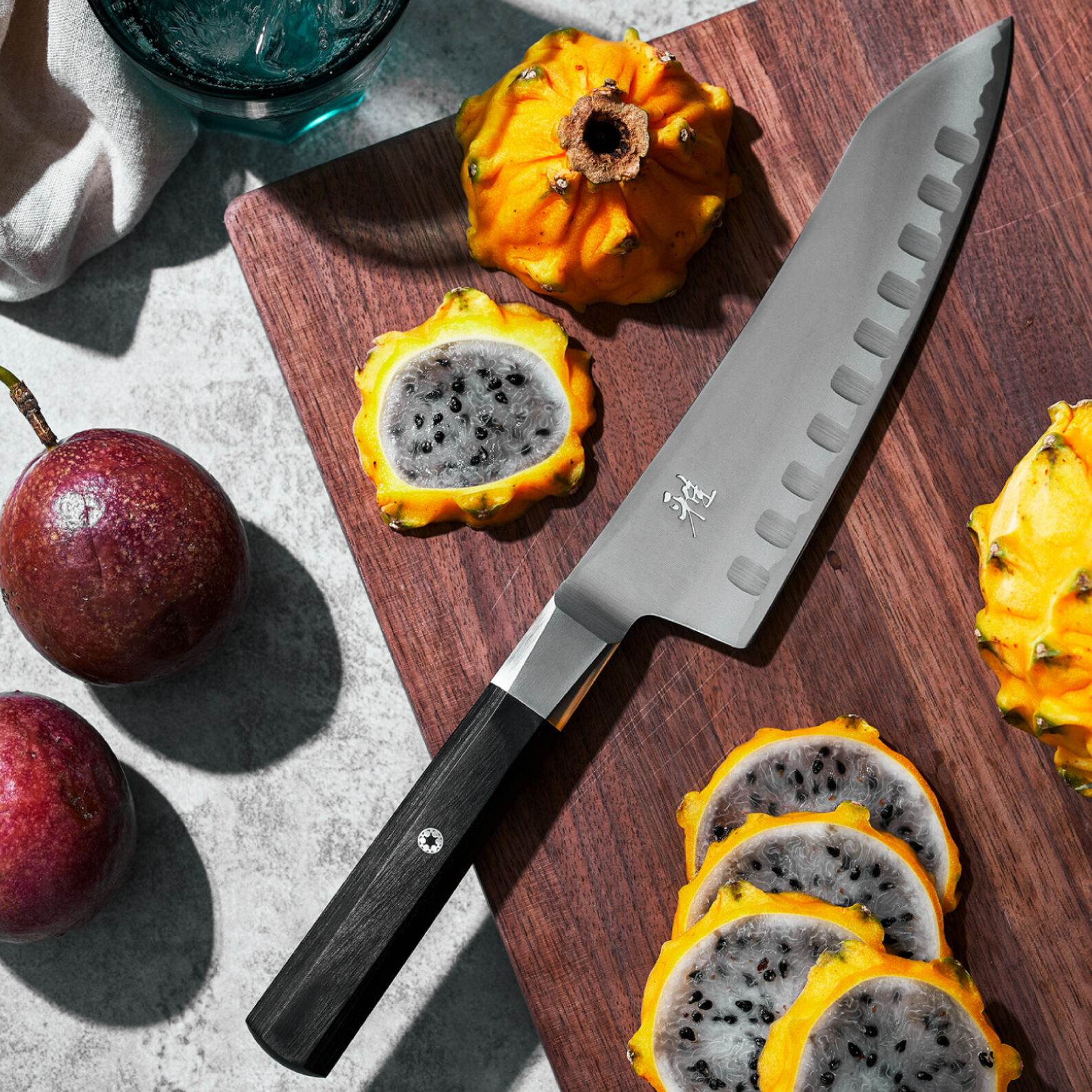
As a global knife expert for nearly 300 years, ZWILLING has developed every type of knife maintenance product you need, for every type of knife user. Those honing and sharpening options include:
HONING YOUR KNIFE
RENEW THE CUTTING EDGE
Under a microscope, you can see that the edge of a knife is made up of thousands of small cutting teeth. Through use, the fine teeth eventually become misaligned, resulting in a dull knife. To renew the cutting edge, it is important to realign the teeth on a regular basis, through a process called honing. One important caveat: don’t ever hone serrated knives. They must be sharpened by a professional or replaced.
HONING WITH A HANDHELD KNIFE SHARPENER
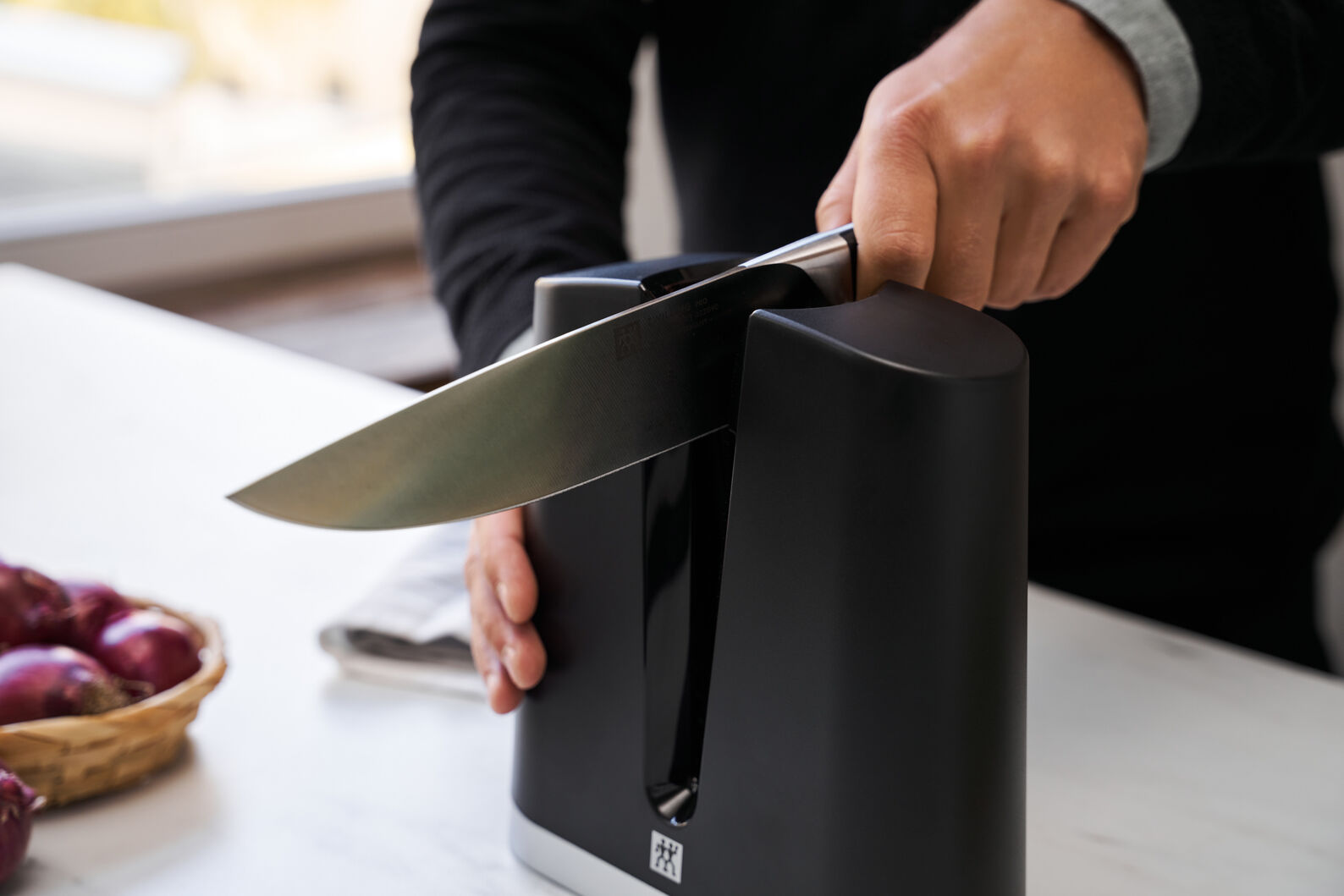
The easiest way to hone your knives is with a handheld sharpener. For fast, effective sharpening, simply place the blade in the slot and gently pull it through a few times.
HONING WITH A HONING STEEL
A second option for honing your knife is a honing steel. If you want to use a steel, just make sure it has a higher hardness factor than the knife to be sharpened.
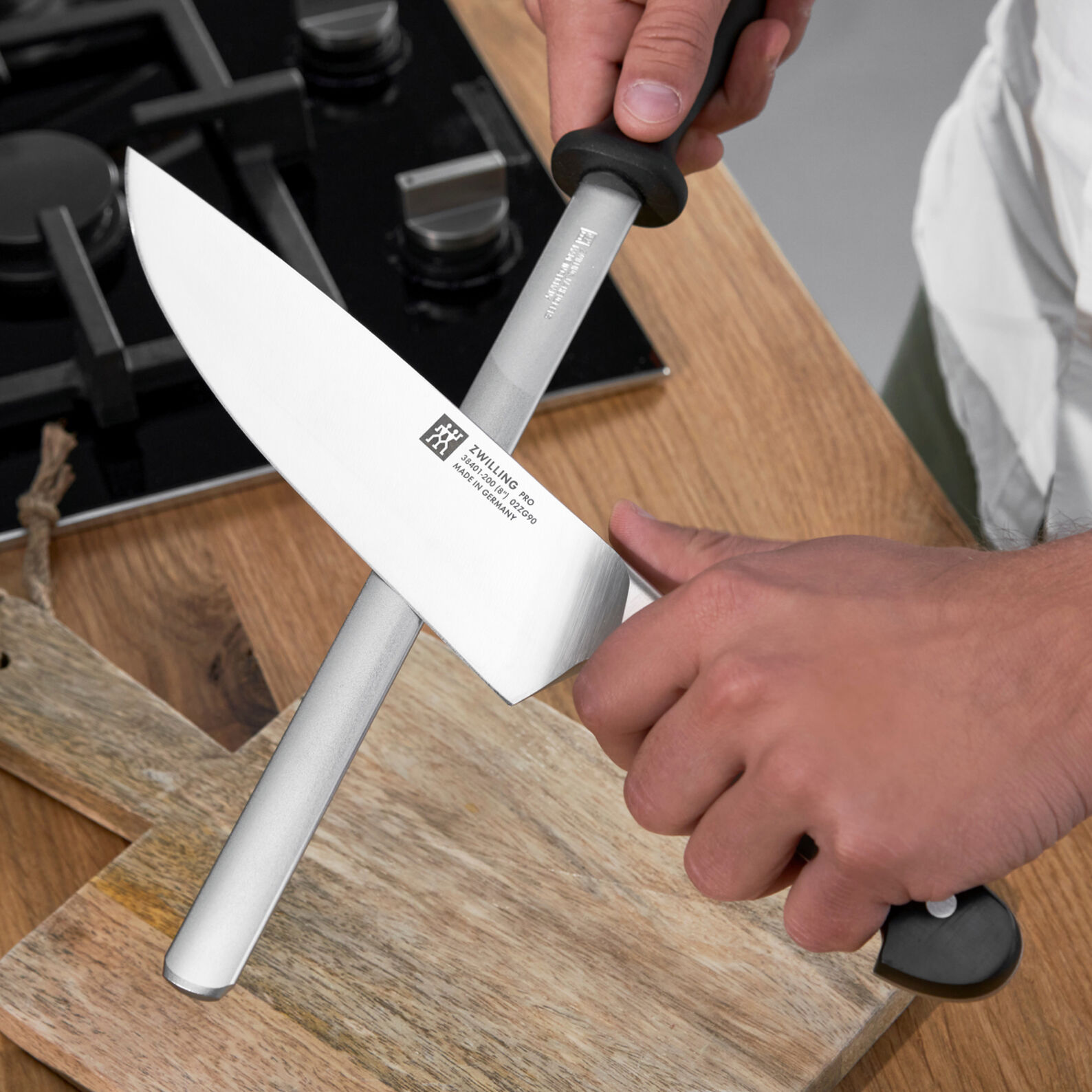
Ok, let’s get started honing your knife with a honing steel.
1. FIND THE PERFECT ANGLE
First hold the steel point down on a table or cutting board. The angle between the blade and the steel should be approximately 15° for ZWILLING knives. Santoku knives and all MIYABI and Kramer made by ZWILLING knives should be 9-12°.
2. MOVEMENT
Pull the knife down and across the steel, moving from the heel of the knife to the tip. Then switch sides. Use more pressure on the first few strokes then ease up on the pressure until the very last couple of strokes. Repeat this 3 to10 times, switching sides after every stroke.
Sharpening Your Knife
If the cutting edge can no longer be renewed by honing, it must be reground to bring on a new edge. That means it’s time to re-sharpen your knife. We offer a number of different options when it comes to sharpening. Let’s take a look at them now.
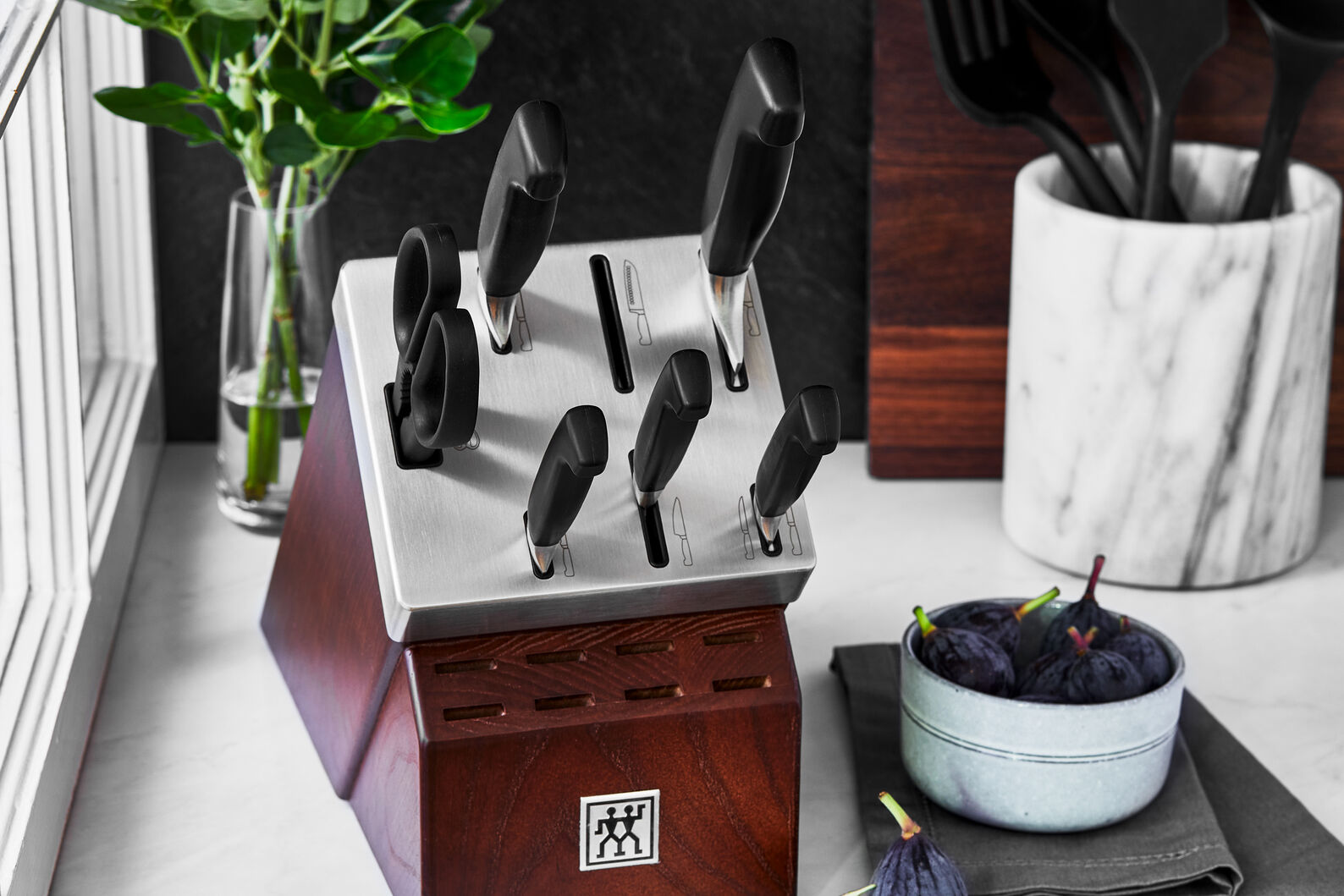
SHARPENING with Self-sharpening Blocks
Self-sharpening blocks do the work of sharpening your knife for you. The fine edge blades included with a self-sharpening block are designed to be stored in specific slots that feature ceramic sharpening wheels. These slots sharpen your knife every time you remove and replace the knives in them. It doesn’t get much easier than that!
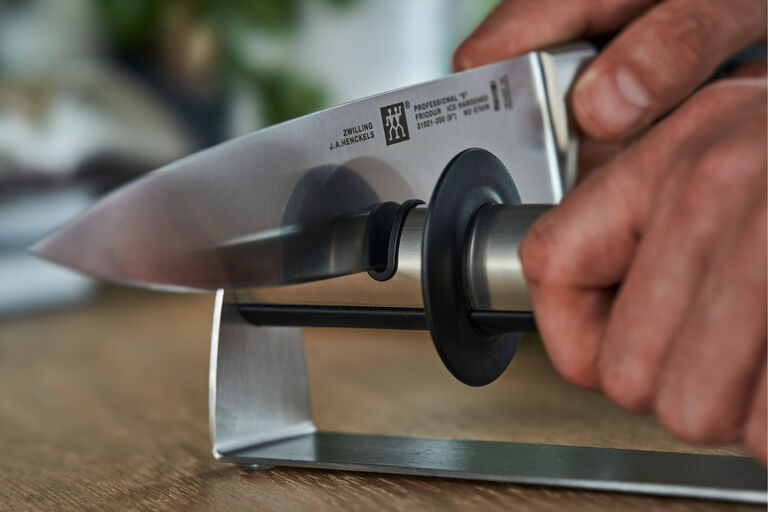
SHARPENING WITH PULL-THROUGH SHARPENERS
Pull through sharpeners are the next step in sharpening complexity and control. Pull through sharpeners feature ceramic rods in both coarse and fine grits that put an edge on even the dullest knife with only a few strokes. They’re available in 2, 4, and 5 stage designs. Our revolutionary V-Edge Sharpener represents the leading edge in pull through designs.
SHARPENING with a sharpening stone
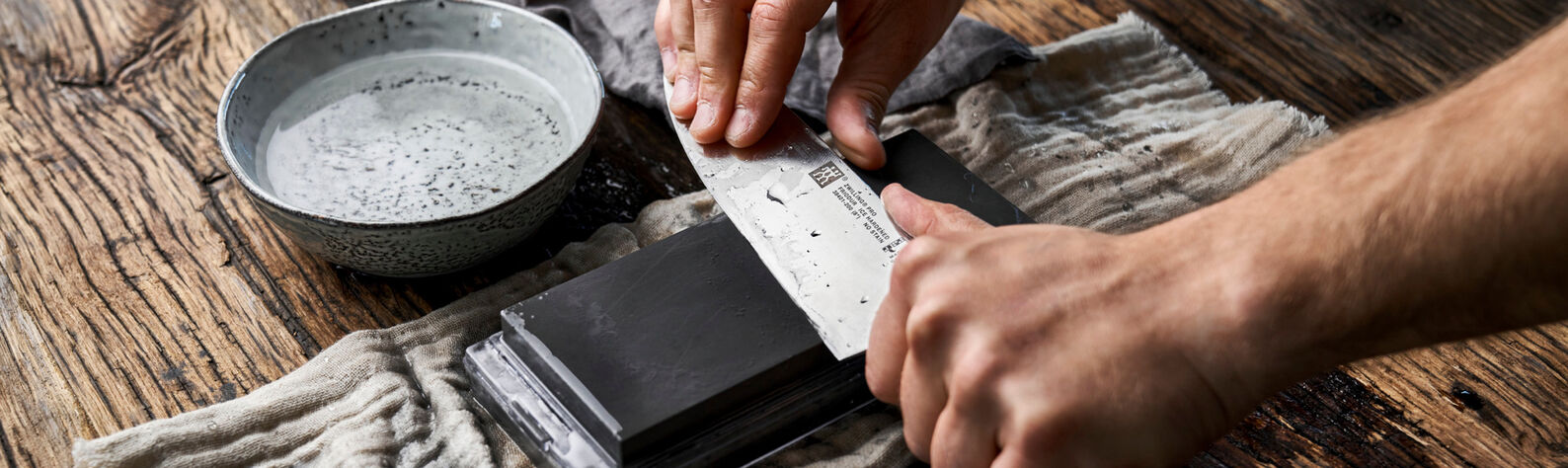
It may take a little practice to get it just right but sharpening on a stone is the number one sharpening technique chosen by culinary professionals. It will give you the ultimate control and precision over the edge you give your knife. Here’s a primer on how to use a sharpening stone.
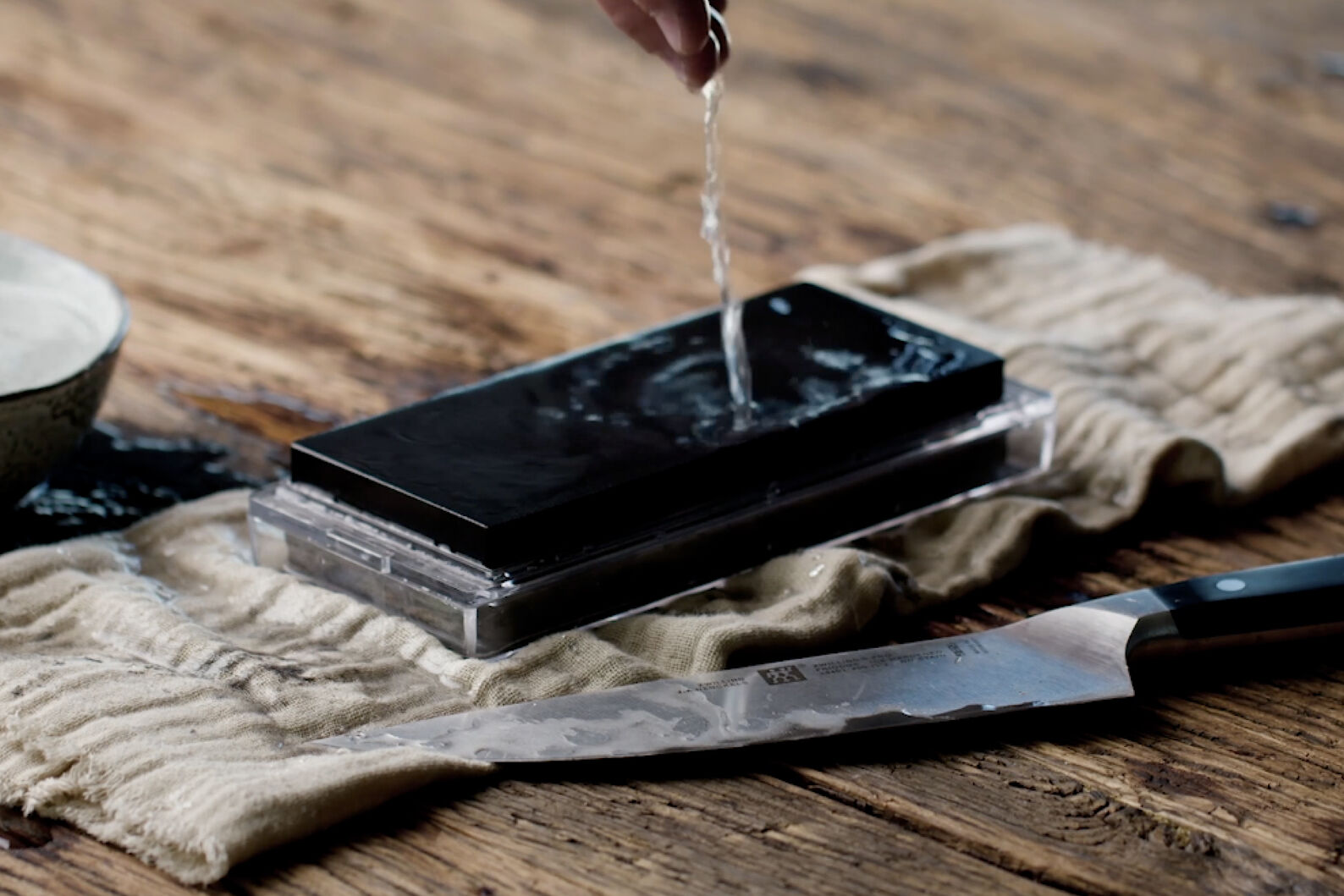
1. PREPARE THE STONE
Before using, immerse the stone in water for about five minutes. Then, place the non-slip side of the stone facing down into a wooden base. For best results, maintain the wetness of the stone throughout the entire process. A grey liquid is produced during sharpening. This is normal and improves the effectiveness.
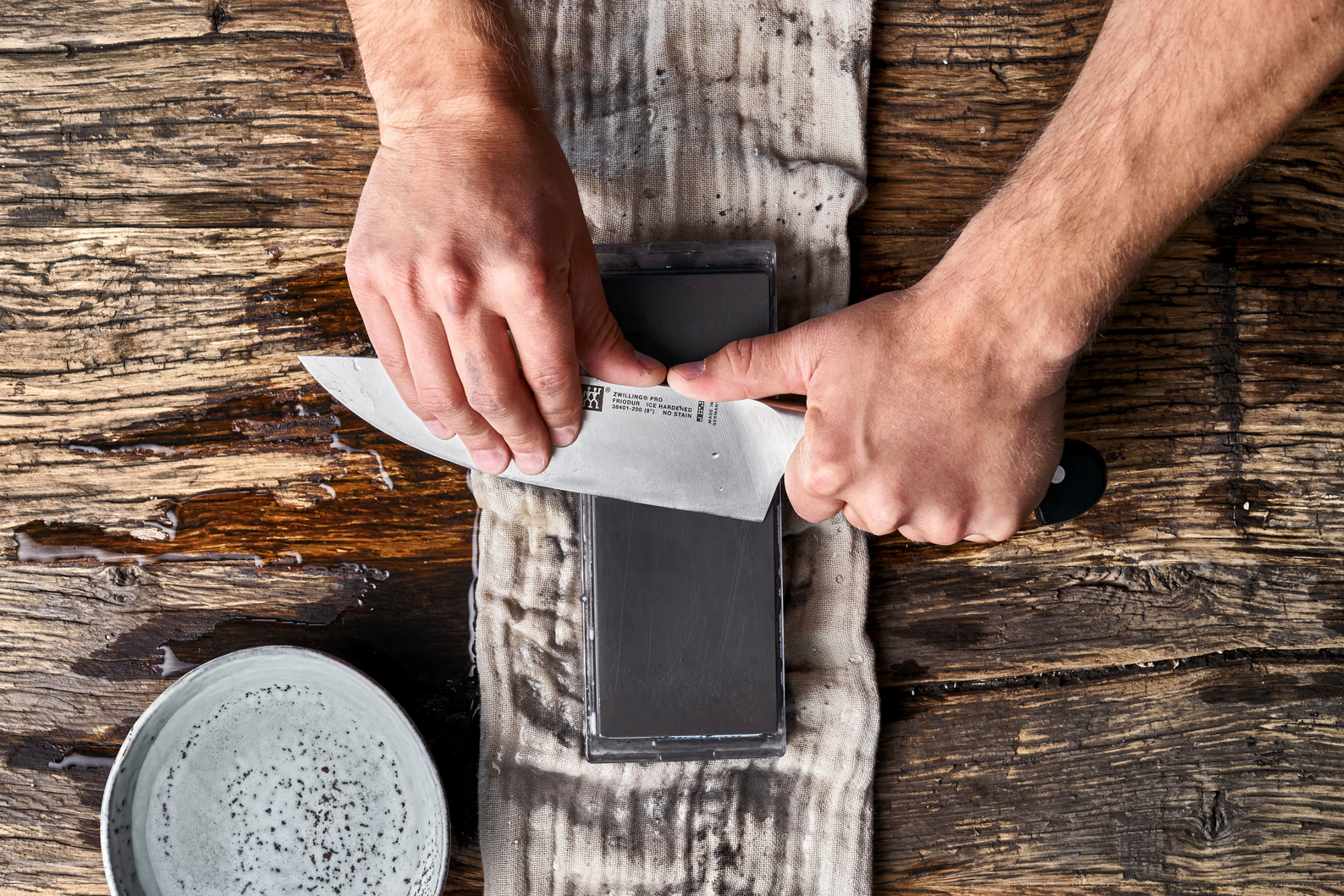
2. ALIGNMENT
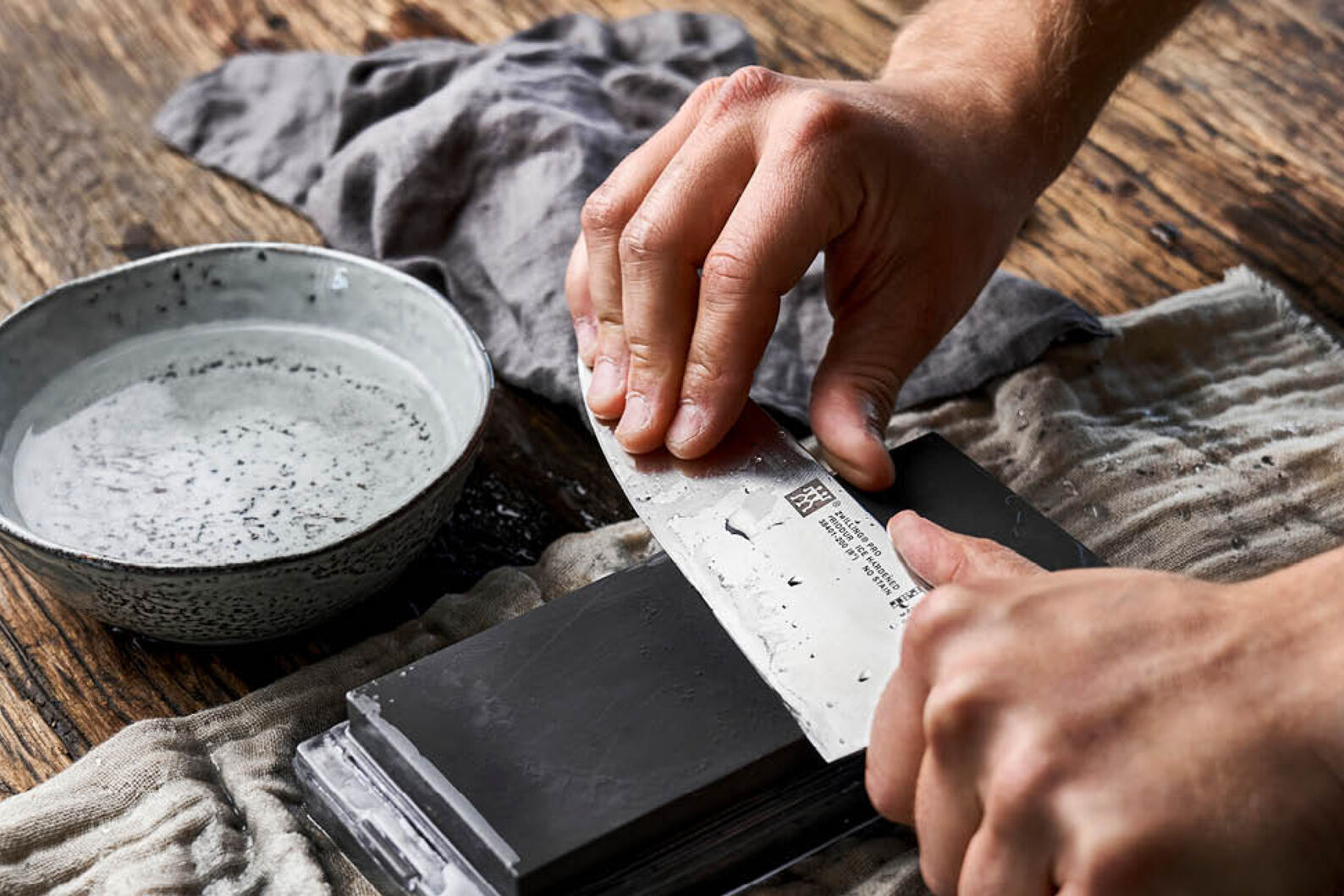
Now hold the handle of the knife firmly in one hand and, with the blade facing you, place it on the sharpening stone at an angle of 10 – 20°. Make sure that there is a gap less than a ¼ inch wide between the back of the blade and the sharpening stone. Place your free hand on the blade, but never directly on the cutting edge. Touching the cutting edge can lead to serious injury so be very careful.
3. MOVEMENT
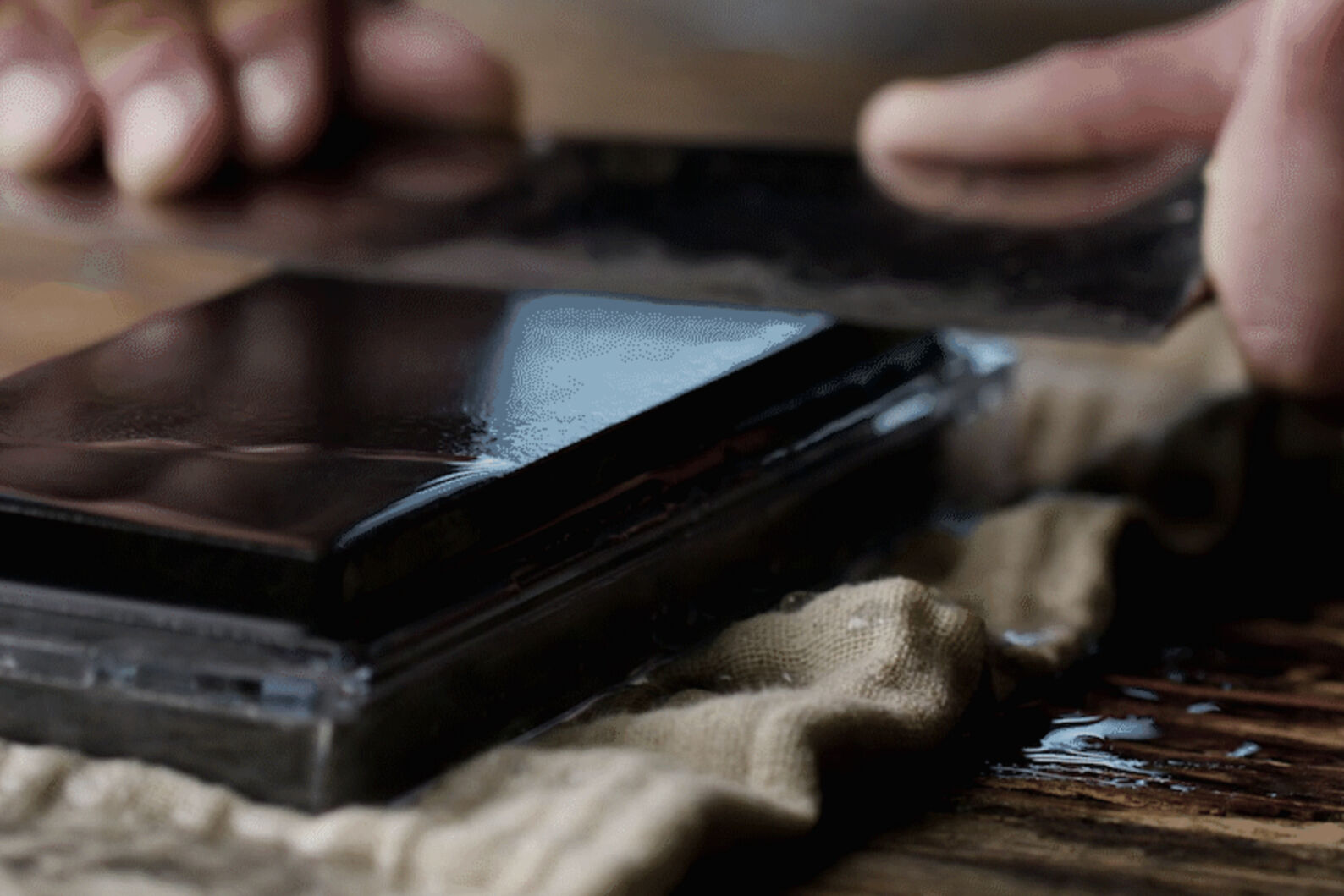
Now move the blade – with a little pressure – in regular strokes up and down across the sharpening stone. Always maintain the same angle between the blade and the stone. You will notice a burr, or a line of waste metal at the edge of the knife, that will become visible after 5 or so strokes. If the knife has a large blade, mentally divide the blade into three parts to sharpen individually. Always start with the tip and work back towards the bolster.
4. CHANGING SIDES
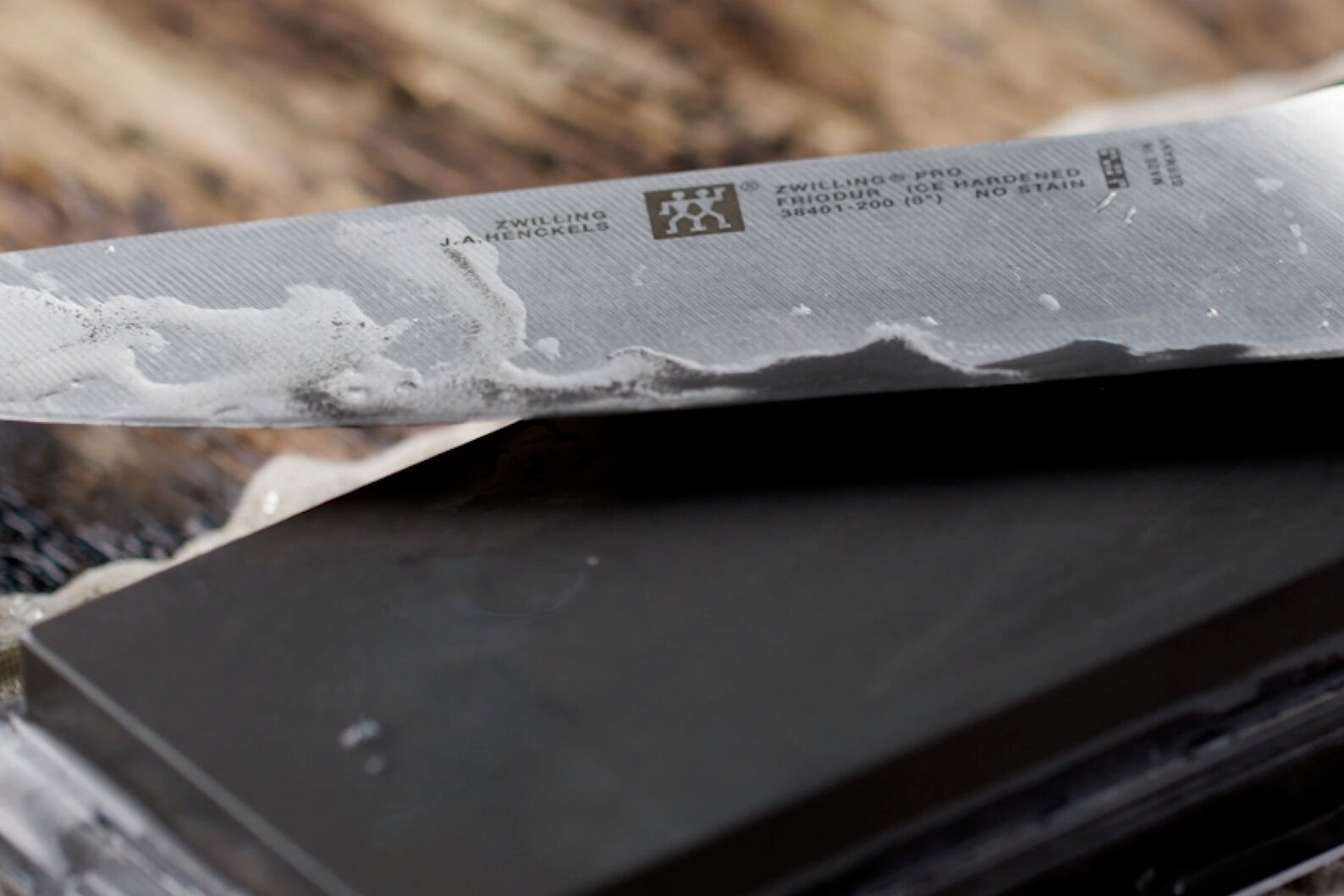
Now turn the knife so that the blade is no longer pointing towards your body. Continue to maintain the angle of 10 – 20° and the gap of about ¼ inch from the back of the blade to the sharpening stone. Slide the cutting edge up and down over the sharpening stone. Grind both sides of the blade alternately, around 5 to 10 times on each side.
5. REMOVING THE BURR
To remove the resulting waste metal from the edge of the knife, draw the knife in a curve from top left to bottom right across the sharpening stone. Then hold the knife under running water to remove all residue and dry it carefully. Store the stone in a cool, dry place – away from direct sunlight.
6. TEST FOR SHARPNESS
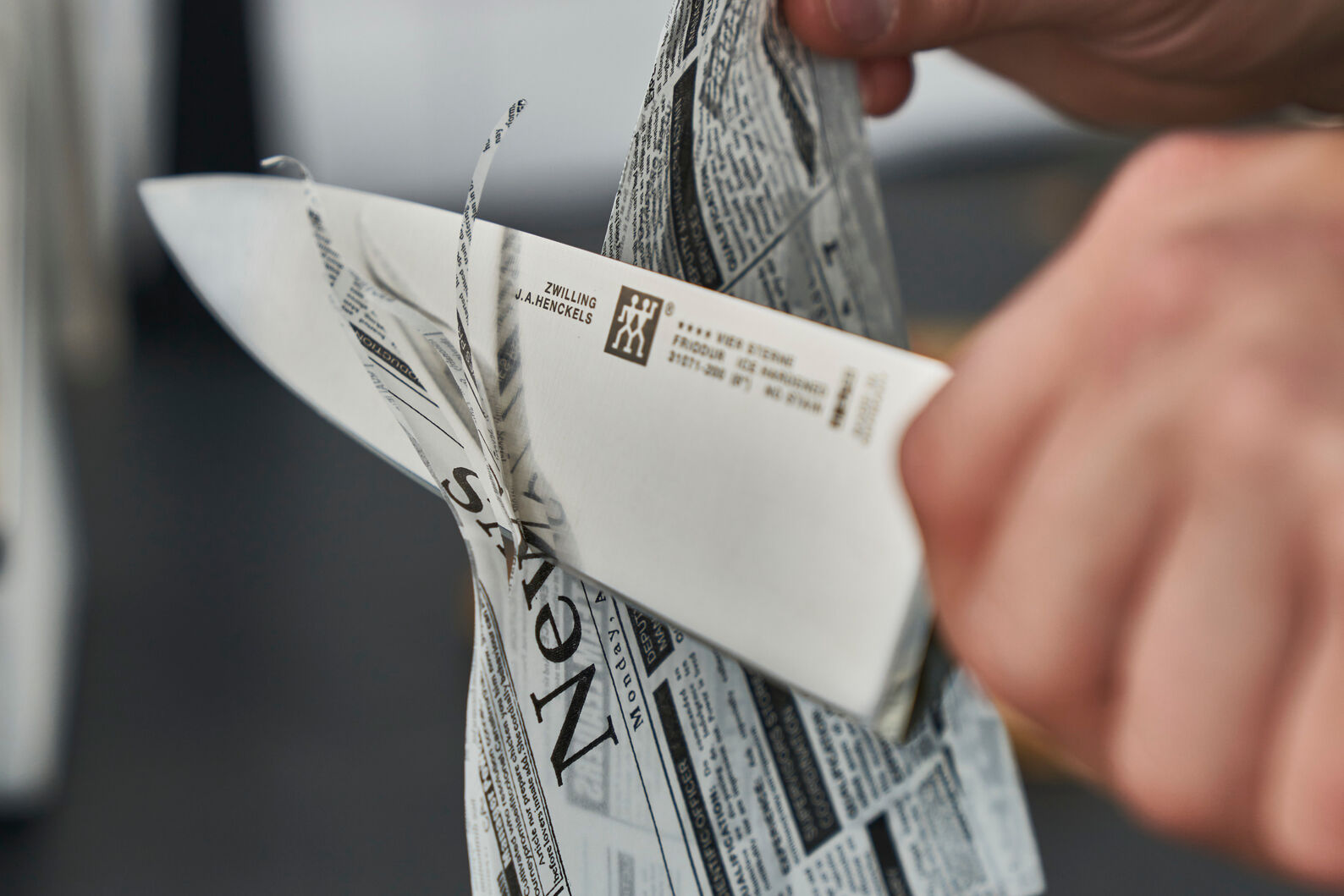
You can use a sheet of paper to check the sharpness of your knife. Hold the sheet of paper up in the air from one end, being careful to keep your fingers out of harm’s way. If the blade is perfectly sharp, it will glide through the sheet of paper without serious pressure or scratching. If you are not yet satisfied with the sharpness of your knife, repeat sharpening until you have achieved the desired result.
THE FINAL SHARPNESS TEST
You can use a sheet of paper to check the sharpness of your knife. Hold the sheet of paper up in the air from one end, being careful to keep your fingers out of harm’s way. If the blade is perfectly sharp, it will glide through the sheet of paper without serious pressure or scratching. If you are not yet satisfied with the sharpness of your knife, repeat sharpening until you have achieved the desired result.